
What Is 6A Mulberry Silk? Why Luxury Brands Choose It?
Introduction
In the luxury textile industry, few materials carry the same prestige as 6A mulberry silk.
But what does “6A” actually mean?
Is it a marketing term — or a real indicator of quality?
For premium brands in the US, Europe, and Australia, understanding silk grading is not optional. It directly affects product durability, retail pricing, brand positioning, and long-term customer satisfaction.
This guide explains what 6A mulberry silk really is, how it is graded, and why high-end brands consistently choose it for pillowcases, bedding, fashion, and wellness products.
Table of Contents
1. What Is Mulberry Silk?
Mulberry silk is produced by silkworms that feed exclusively on mulberry leaves.
This controlled diet results in:
Longer, more uniform silk filaments
Smoother texture
Higher tensile strength
More consistent color absorption
Because of its uniform fiber structure, mulberry silk is considered the highest-quality type of silk available for luxury manufacturing.
2. What Does “6A” Mean in Silk Grading?
Silk grading measures the quality of raw silk fibers before weaving.
Grades typically range from A to 6A:
A – Lower uniformity
2A–5A – Moderate quality
6A – Highest grade
6A Grade Characteristics:
Longest continuous filaments
Minimal impurities
Even thickness
High strength
Natural luster
Soft, smooth hand feel
The higher the grade, the fewer fiber breaks occur during weaving — which leads to smoother finished fabric.
3. 6A Mulberry Silk vs Lower Grades
The most important difference between 3A, 4A, 5A, and 6A silk is filament length. Longer filaments mean:
-
Fewer joins in yarn
-
Smoother surface
-
Reduced pilling
-
Better durability
Shorter fibers require more twisting to form yarn, which can result in rougher texture and weaker structure.
Luxury brands choose 6A silk because it reduces quality complaints and returns — especially for pillowcases and bedding.
Here is a simplified comparison:
| Feature | 3A–4A Silk | 5A Silk | 6A Silk |
|---|---|---|---|
| Fiber Length | Shorter | Long | Longest |
| Surface Smoothness | Moderate | Smooth | Extremely smooth |
| Durability | Medium | High | Very high |
| Shine | Moderate | Natural gloss | Refined luster |
| Premium Suitability | Limited | Good | Ideal |
For mass-market products, 4A or 5A may be acceptable.
For luxury brands targeting $80+ pillowcases or high-end retail stores, 6A silk is the industry standard.
4. How 6A Silk Is Produced
High-grade silk begins long before weaving.
Step 1: Controlled Sericulture
Silkworms are raised in regulated environments and fed exclusively with high-quality mulberry leaves.
Consistency at this stage determines filament quality.
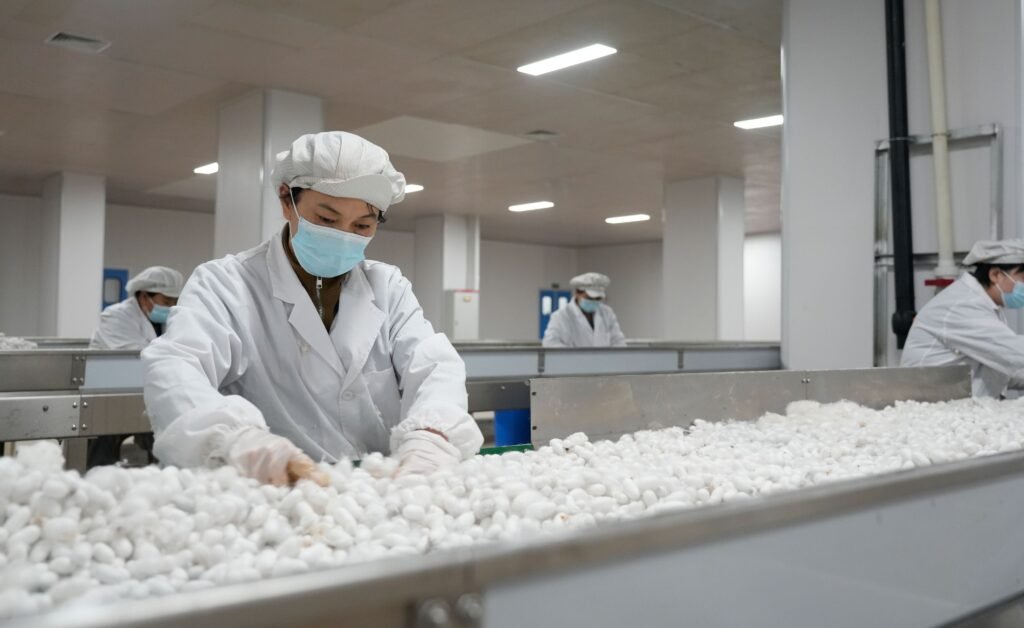
Step 2: Cocoon Selection
Only uniform, defect-free cocoons are selected for 6A reeling.
Cocoons with broken filaments or irregular shapes are downgraded.
Step 3: Precision Reeling
Filaments are carefully unwound from cocoons and combined to create raw silk threads.
For 6A grade, filament breakage must be minimal.
Step 4: Weaving & Finishing
Once spun into yarn, the silk is woven into fabrics such as:
Charmeuse (used in pillowcases and sleepwear)
Crepe
Twill (used for scarves)
Satin weave
Finishing processes determine final softness and drape.
5. What Makes 6A Silk Ideal for Luxury Products?
Luxury brands prioritize:
Longevity
Consistent texture
Refined appearance
Premium customer experience
6A silk supports all four.
1. Superior Hand Feel
Customers immediately recognize smoothness.
Higher-grade silk has fewer micro-irregularities, producing a more fluid, cool-to-touch sensation.
2. Enhanced Durability
Longer filaments result in stronger yarns.
For pillowcases washed frequently, durability is critical.
3. Improved Dye Absorption
Uniform fibers absorb dye evenly.
This reduces:
Shade inconsistencies
Patchiness
Uneven gloss
Consistency is especially important for brands offering seasonal color collections.
4. Elevated Brand Positioning
Luxury marketing often highlights “100% 6A mulberry silk” as a quality signal.
It communicates:
Material transparency
Premium sourcing
Investment in quality
In competitive Western markets, this differentiation matters.
6. 6A Mulberry Silk and Momme Weight: Understanding the Difference
Brands sometimes confuse grade with momme.
They are different.
-
Grade (6A) = Fiber quality
-
Momme (mm) = Fabric weight & density
A 6A silk pillowcase can be:
-
19 momme (lighter)
-
22 momme (balanced)
-
25 momme (heavier, more durable)
Premium brands typically combine:
6A grade + 19, 22 or 25 momme
This ensures both quality and longevity.
7. Common Misconceptions About 6A Silk
“All mulberry silk is 6A.”
False. Mulberry silk refers to silkworm diet.
6A refers to fiber grade.
“6A silk guarantees quality.”
Not entirely. Final product quality also depends on:
Weaving precision
Dye control
Sewing standards
Quality inspection
High-grade raw material must be paired with professional manufacturing.
“6A silk feels the same regardless of momme.”
Incorrect. Momme weight affects thickness and durability, even if grade is identical.
8.Why Western Luxury Brands Consistently Choose 6A Mulberry Silk
Across pillowcases, bedding, scarves, and wellness accessories, 6A silk delivers:
Reliable performance
Premium tactile experience
Stronger durability
Higher customer satisfaction
Reduced defect rate
Elevated brand storytelling
In high-end retail, material integrity directly influences review ratings and repeat purchase rates.
Luxury brands cannot afford inconsistency.
9. FAQ for 6A Mulberry Silk
What does 6A mean in silk?
6A is the highest silk grade, indicating long filament length, uniform texture, and minimal impurities.
Is 6A silk always 25 momme?
No. 6A refers to fiber quality, while momme measures fabric weight.
Why do luxury pillowcase brands use 6A silk?
Because it reduces pilling, improves longevity, and enhances customer experience.
How can I confirm silk grade?
Request material documentation and physical samples from your manufacturer.
Final Thoughts: Material Integrity Defines Luxury
6A mulberry silk is not just a marketing phrase. It is a measurable standard of fiber excellence.
For brands targeting premium markets in the US, Europe, and Australia, material consistency directly impacts:
Product lifespan
Brand credibility
Customer satisfaction
Retail pricing power
When paired with professional manufacturing and strict quality control, 6A mulberry silk becomes the foundation of scalable luxury product lines.
In the world of high-end textiles, quality begins at the fiber level.
Share: