Introduction
For beauty brands, haircare companies, salons, sleepwear brands, and private-label retailers, a silk bonnet is more than a simple hair accessory. The right bonnet combines fabric quality, construction, fit, comfort, durability, and branding into one product.
For businesses developing a private-label or custom silk bonnet collection, choosing the right manufacturer is especially important. A bonnet that looks attractive in a product photo may not perform well in actual use if the elastic is too tight, the bonnet slips during sleep, the size is unsuitable for textured or long hair, or the silk quality does not match the product’s positioning.
This guide explains the key factors buyers should consider when developing custom silk bonnets, including silk specifications, bonnet construction, sizing, elastic design, customization options, sampling, MOQ, and bulk ordering.
Table of Contents
1. What Is a Custom Silk Bonnet?
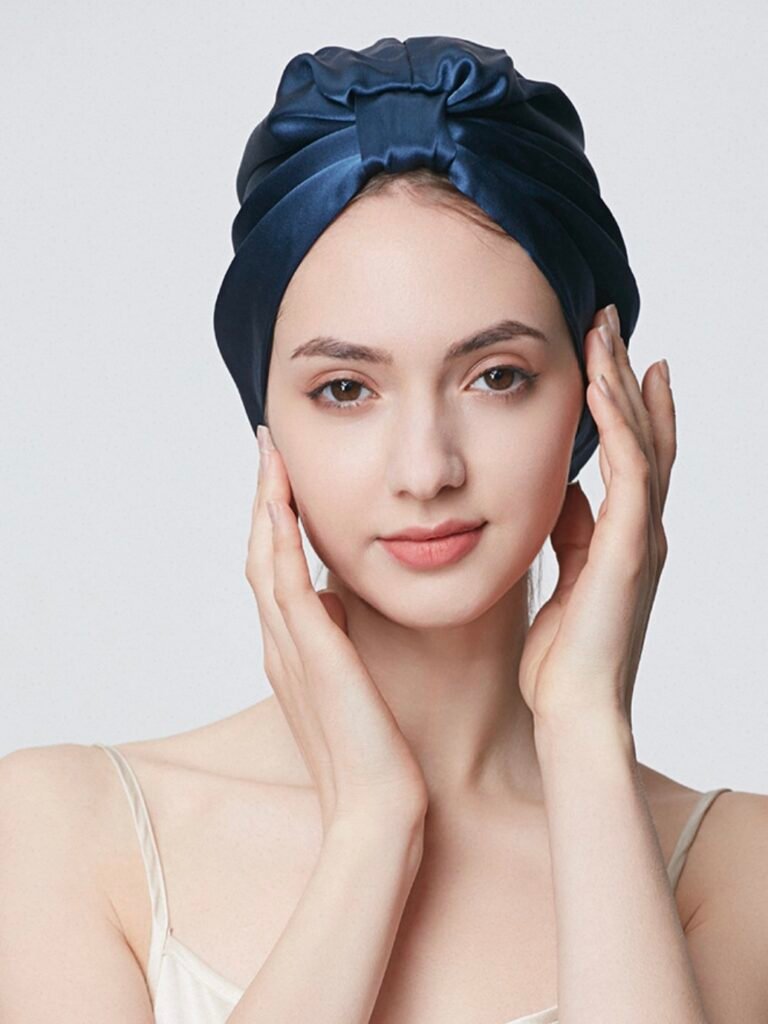
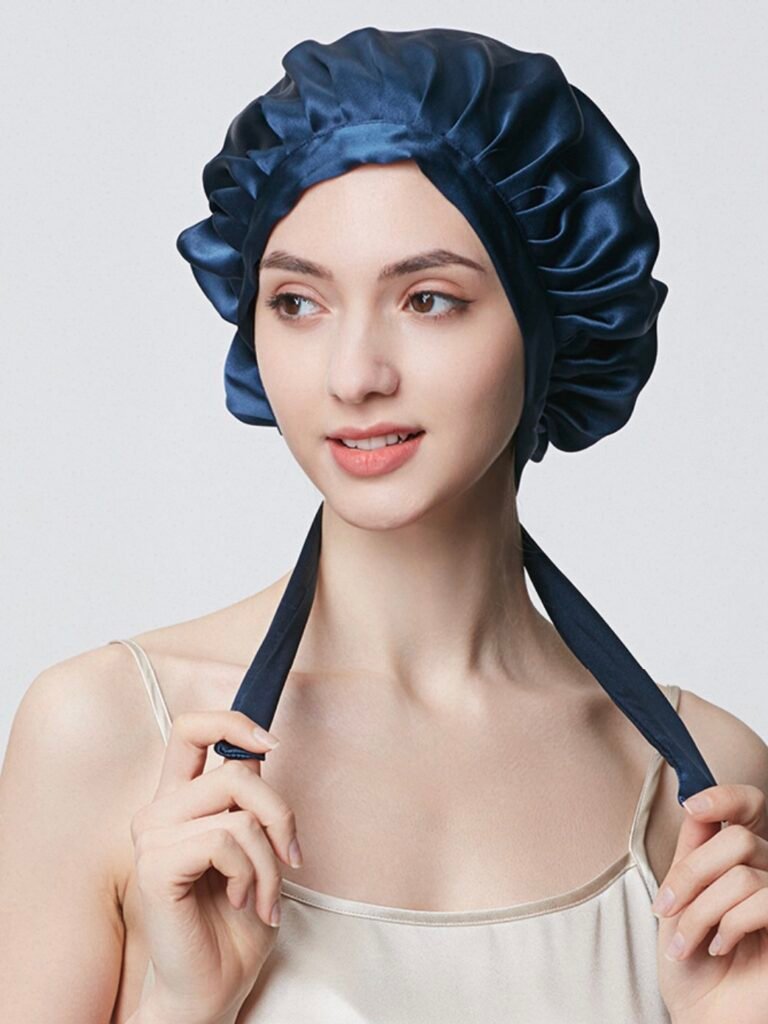
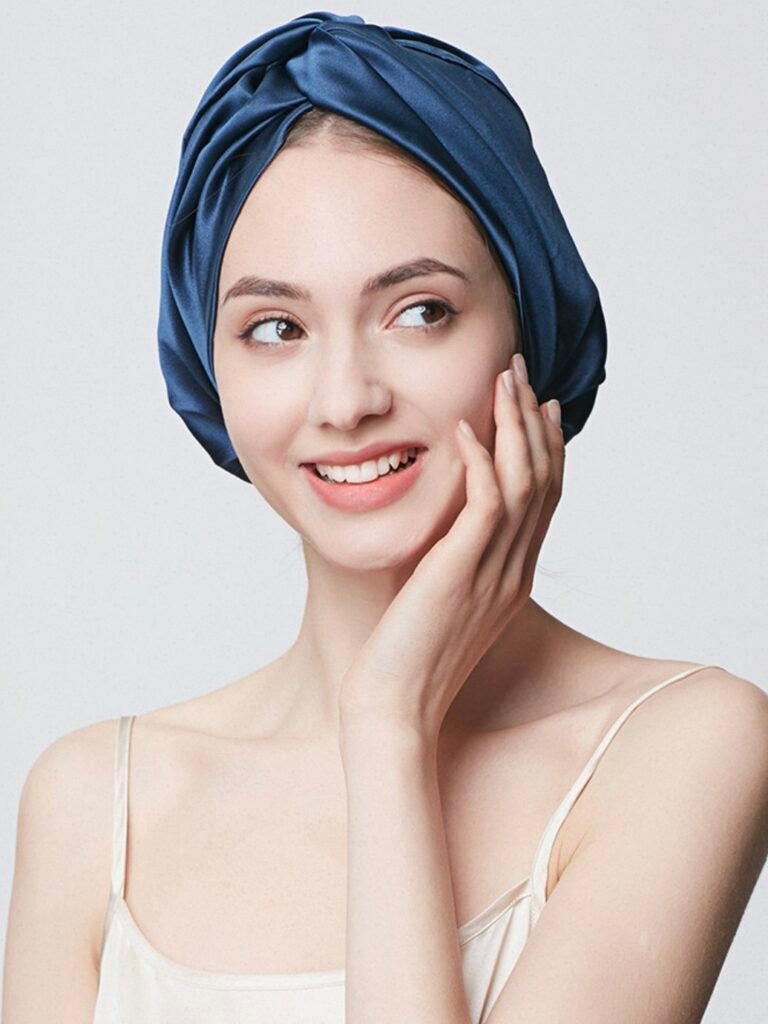
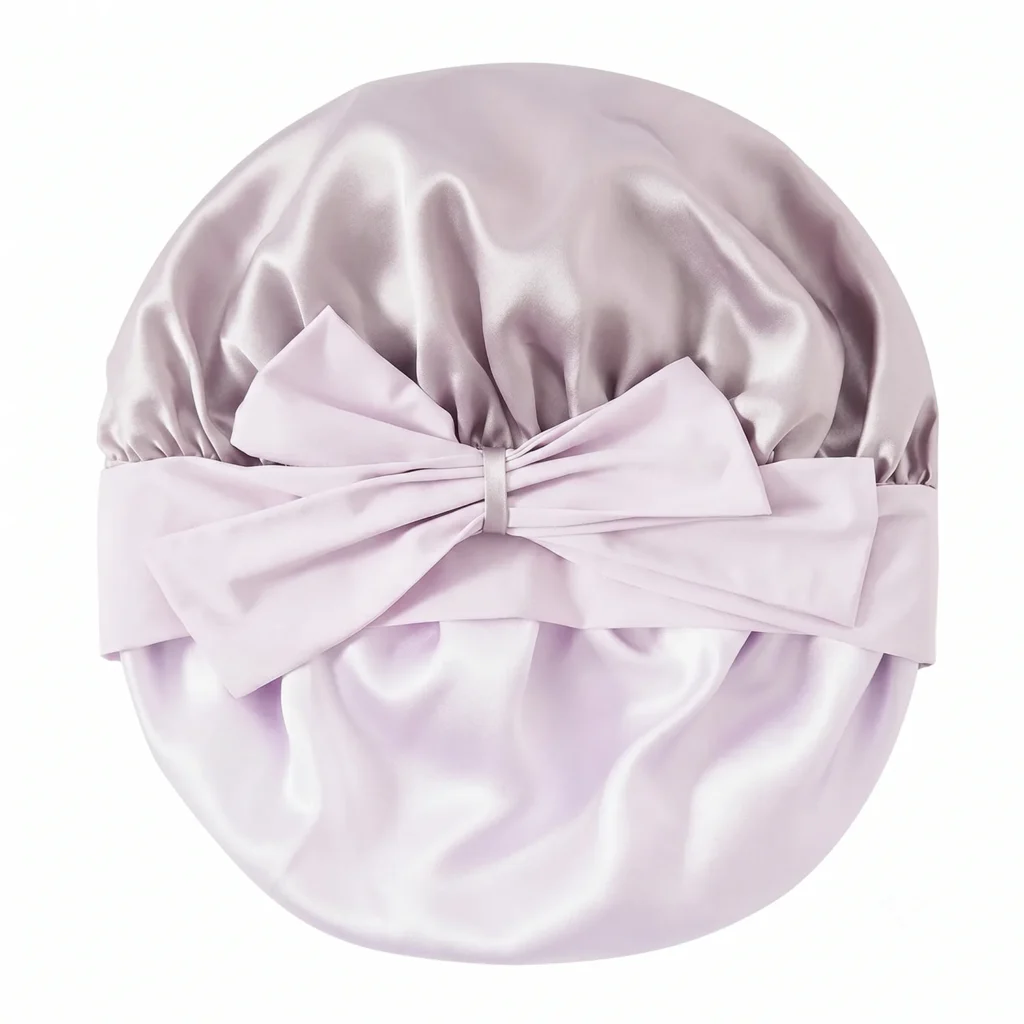
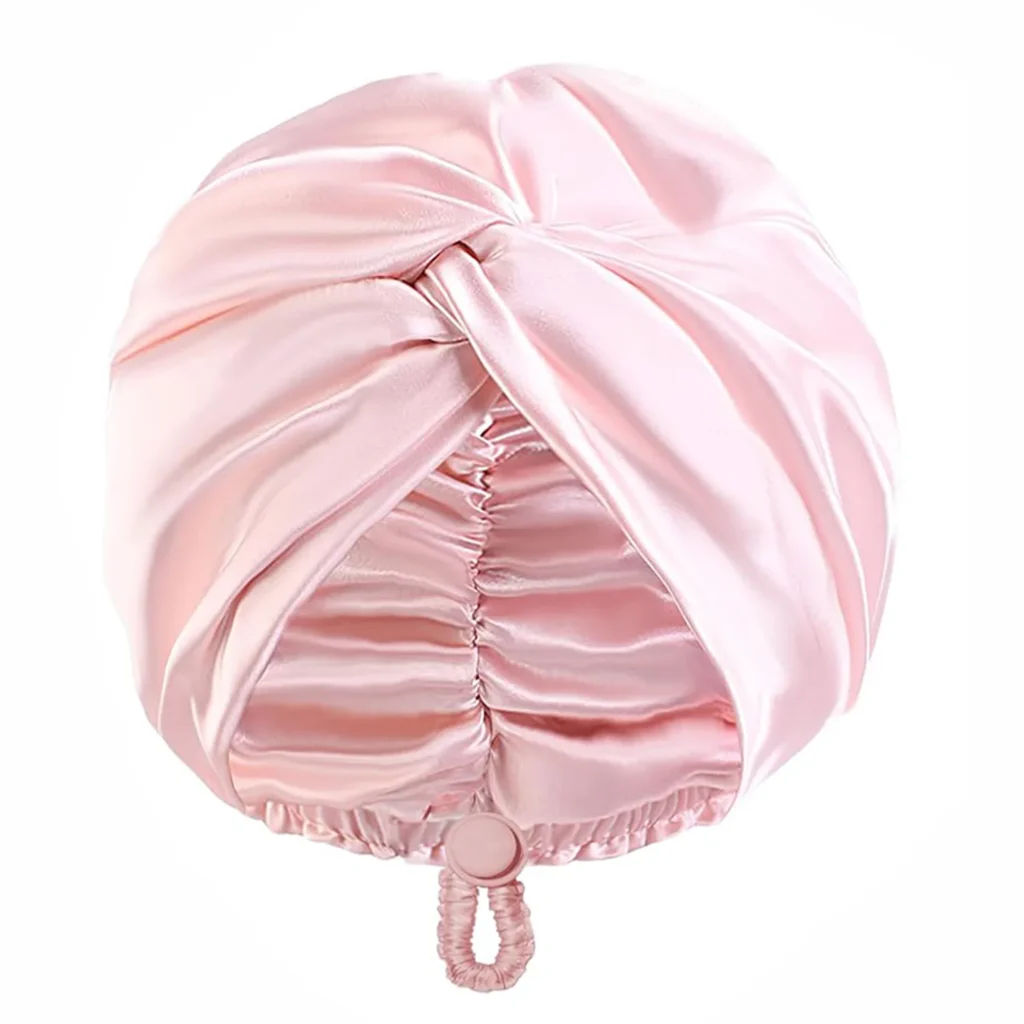
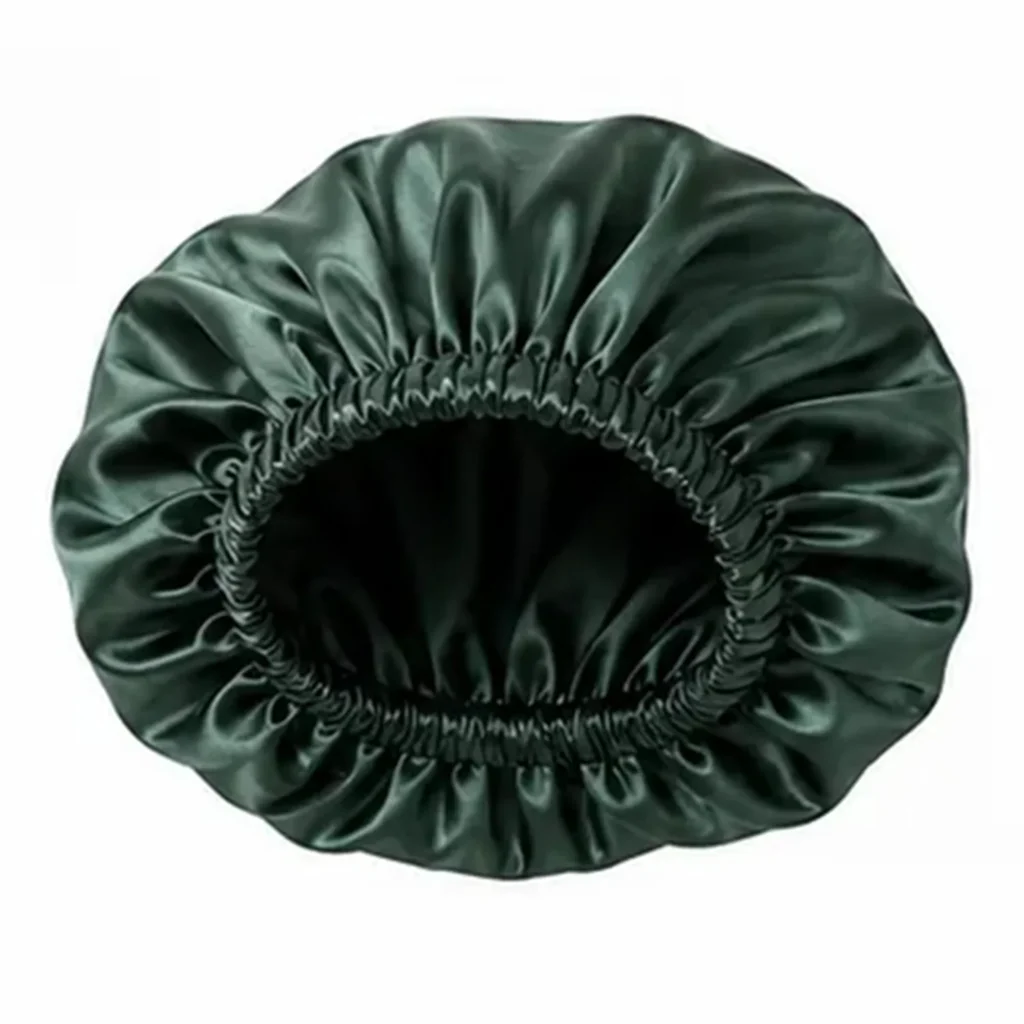
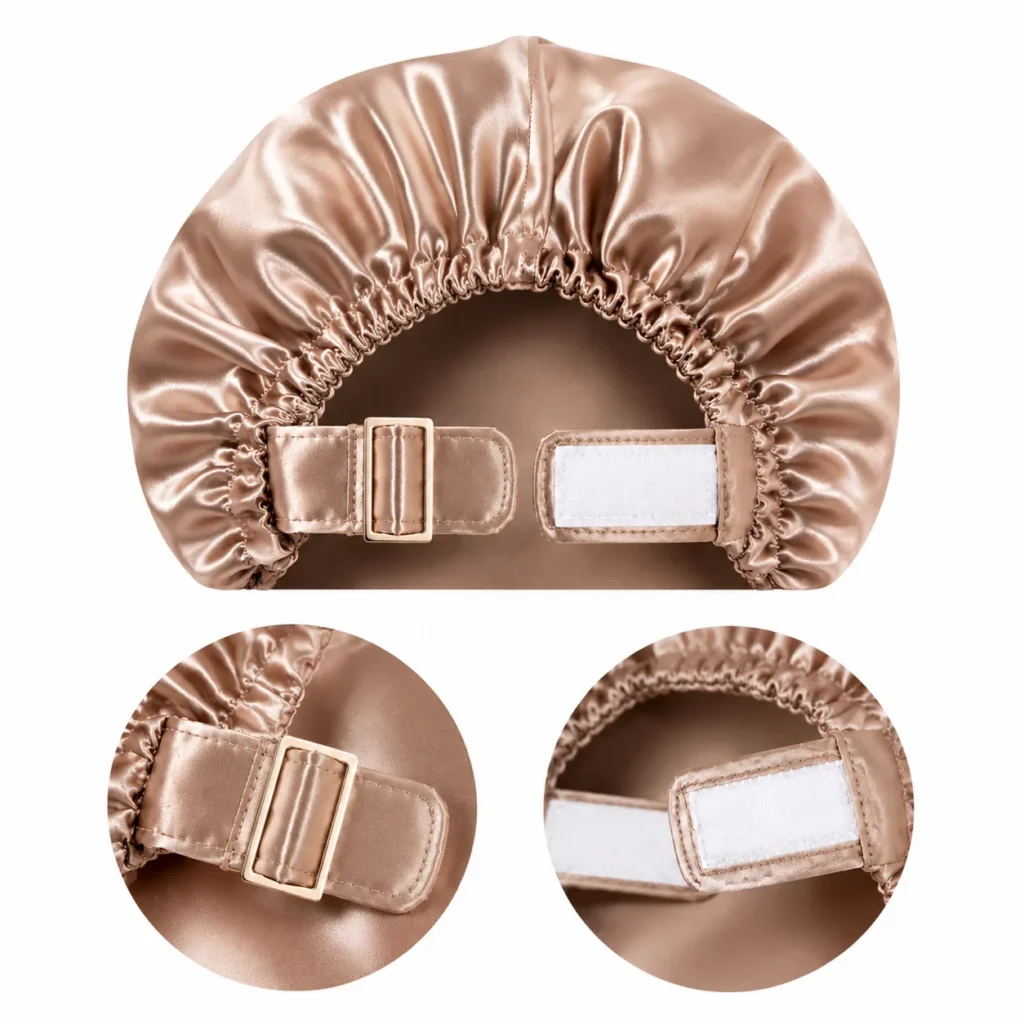
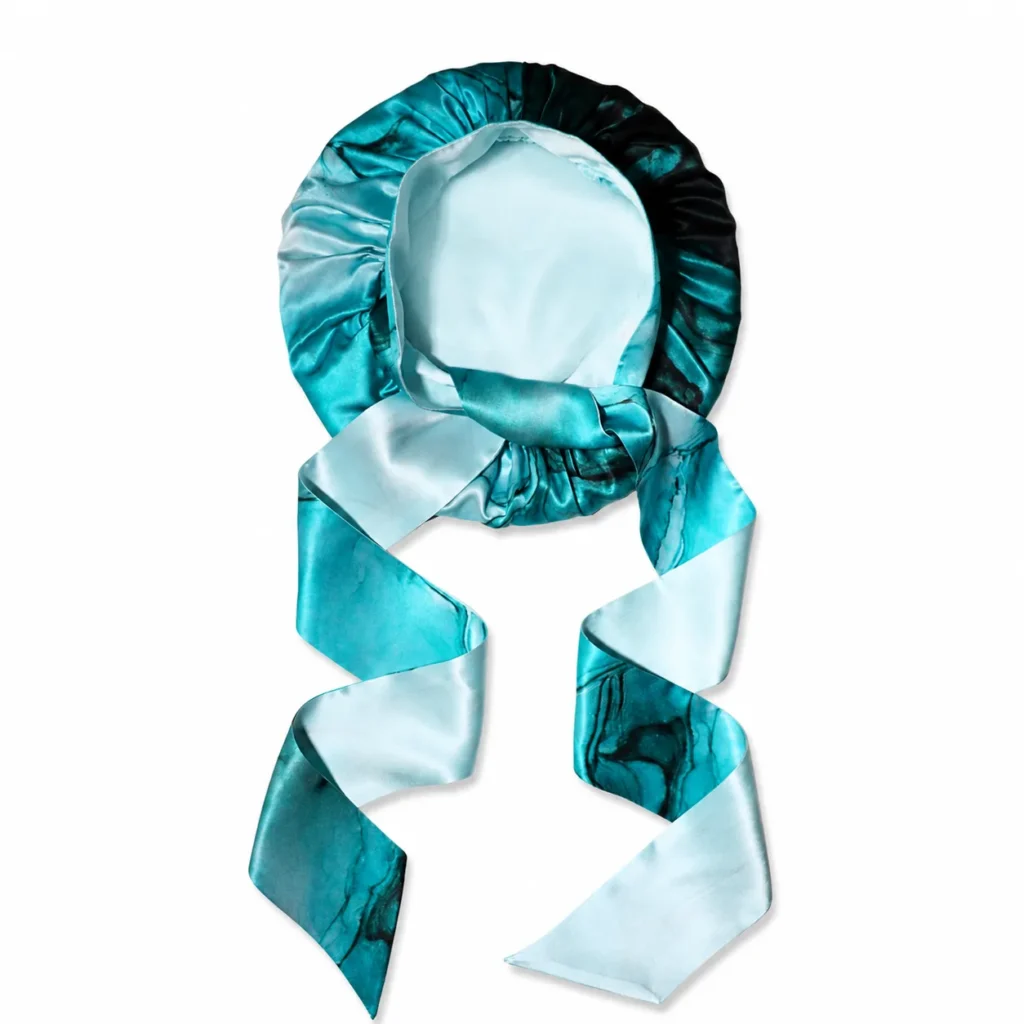
A custom silk bonnet is a hair-protection bonnet manufactured according to a brand’s specific requirements rather than being selected from a standard catalog.
Depending on the brand’s positioning, customization may include:
- Silk type and silk grade
- Momme weight
- Fabric color
- Printed patterns
- Bonnet size
- Shape and construction
- Elastic band design
- Lining or double-layer construction
- Branding and labels
- Packaging
- Logo printing or embroidery
- Individual retail packaging
A manufacturer can usually develop the product from an existing bonnet pattern or create a completely new construction based on the buyer’s specifications.
For brands launching a premium haircare accessory, custom development allows the bonnet to become part of the brand’s overall identity rather than looking like a generic wholesale product.
2. Why Choose Silk for a Hair Bonnet?
Silk is widely used for premium hair accessories because of its smooth surface and luxurious hand feel.
Compared with rougher textile surfaces, silk can provide a smoother contact surface between the fabric and hair. This is particularly attractive for products designed for overnight hair protection.
A silk bonnet can be positioned for customers with:
- Curly hair
- Wavy hair
- Coily and textured hair
- Natural hair
- Braids and protective hairstyles
- Long hair
- Extensions
- Chemically treated or dry hair
For a B2B buyer, however, “silk” alone is not a sufficient specification.
The manufacturer should clearly define the fiber composition, silk type, momme, fabric construction, and finishing.
3. Choosing the Right Silk for a Custom Bonnet
One of the first decisions in product development is the silk specification.
Mulberry Silk
For premium silk bonnets, 100% Mulberry silk is a common choice.
It offers a smooth hand feel and premium positioning and can be used by brands that want to position their bonnet as a high-end haircare accessory.
When requesting a quotation, buyers should specify:
Fiber: 100% Mulberry Silk
Silk Weight: e.g. 19 Momme or 22 Momme
Fabric: Silk satin or another suitable silk construction
Color: Custom Pantone or standard color reference
The exact specification should depend on the target retail price and product positioning.
Silk Momme
Momme, commonly written as mm, is a traditional measurement used to describe the weight and density of silk fabric.
Common silk specifications for premium accessories include:
- 16 momme
- 19 momme
- 22 momme
Higher momme does not automatically mean that a product is better in every situation. The ideal specification depends on the desired hand feel, durability, appearance, price point, and construction.
For premium silk bonnets, 19–22 momme can be considered when the brand wants a more substantial and luxurious product.
Why 22 Momme Silk Is Popular for Premium Products
22 momme silk provides a relatively substantial fabric construction while maintaining the smooth and luxurious characteristics associated with silk.
For brands targeting the premium market, it can be a strong option when durability and luxury positioning are both important.
However, buyers should evaluate the complete fabric specification rather than selecting a supplier based only on momme.
4. Silk Bonnet Construction: What Should Buyers Check?
The construction of a silk bonnet has a significant influence on comfort, appearance, durability, and customer satisfaction.
A professional manufacturer should be able to explain how each component is constructed.
Single-Layer Silk Bonnet
A single-layer bonnet uses one layer of silk fabric.
Advantages may include:
- Lightweight construction
- Lower material consumption
- Lower production cost
- Simple appearance
- Suitable for entry-level products
This construction may work well for brands that want a lightweight and more affordable silk bonnet.
Double-Layer Silk Bonnet
A double-layer bonnet uses two fabric layers.
Potential advantages include:
- More substantial hand feel
- Enhanced appearance
- Increased durability
- More premium positioning
- Better structure
The additional fabric also increases material consumption and production cost, so the buyer should evaluate whether the premium construction fits the intended retail price.
Elastic Band Design Is Critical
One of the most overlooked parts of a silk bonnet is the elastic band.
Even excellent silk fabric cannot compensate for a poorly designed elastic system.
If the elastic is too tight, customers may find the bonnet uncomfortable. If it is too loose, the bonnet may move or fall off during sleep.
For this reason, buyers should consider:
- Elastic width
- Elastic tension
- Elastic length
- Elastic recovery
- How the elastic is enclosed
- Whether the elastic is directly exposed to the skin
- Whether the elastic can accommodate different head sizes
Wide Elastic Bands
A wider elastic band can help distribute pressure over a larger area.
For premium bonnets, a wider covered elastic band may provide a more comfortable feeling than a narrow exposed elastic.
A buyer may specify something such as a 3–4 cm covered elastic band, depending on the target fit and design.
The final elastic specification should always be confirmed through physical samples.
Enclosed Elastic vs. Exposed Elastic
There are several ways to construct the elastic area.
Fully Enclosed Elastic
The elastic is covered by the silk fabric.
This creates a cleaner appearance and can provide a softer contact surface.
It is particularly suitable for premium products.
Exposed or Partially Exposed Elastic
The elastic is visible or partially exposed.
This construction can reduce production complexity and cost but may provide a less luxurious appearance.
For a premium silk bonnet brand, fully enclosed elastic is often worth considering.
Silk Bonnet Sizing
Sizing is one of the most important decisions when developing a custom bonnet.
There is no single “universal” bonnet size that works equally well for every customer.
The appropriate size depends on:
- Head circumference
- Hair volume
- Hair length
- Curl pattern
- Braids
- Locs
- Extensions
- Protective hairstyles
- Desired bonnet depth
A brand targeting customers with textured or voluminous hair may need a significantly larger bonnet than a brand targeting customers with short or straight hair.
Typical Size Categories
A custom bonnet manufacturer may develop several size options such as:
Small / Standard
Designed for customers with relatively short or low-volume hair.
Medium
Suitable for general everyday use and moderate hair volume.
Large
Designed for longer or fuller hair.
XL / Extra Large
Suitable for customers with very long, curly, coily, braided, or highly voluminous hair.
For brands serving textured-hair customers, offering an XL option can be particularly valuable.
However, size names alone are not enough.
The manufacturer should provide actual measurements such as:
- Flat diameter
- Finished diameter
- Bonnet depth
- Opening circumference
- Elastic length
- Crown height
5. Custom Silk Bonnet Shapes
Different bonnet shapes can create different levels of hair capacity and visual appeal.
Traditional Round Bonnet
A classic round shape is simple to manufacture and suitable for general-purpose silk bonnets.
Oversized Bonnet
An oversized bonnet provides additional space for long or voluminous hairstyles.
This is increasingly relevant for brands targeting curly, coily, braided, or textured hair customers.
Slouch Bonnet
A slouch-style bonnet has additional fabric volume and creates a more relaxed silhouette.
It can be useful for brands looking for a more fashionable appearance.
Adjustable Bonnet
An adjustable construction may use:
- Adjustable ties
- Toggle systems
- Elastic adjustment
- Multiple fastening positions
This can help brands accommodate a wider range of customers.
6. What Should Be Included in a Silk Bonnet Tech Pack?
For brands developing a custom product, a technical specification sheet can significantly reduce communication problems.
A basic silk bonnet tech pack should include:
Product Information
- Product name
- Product code
- Intended market
- Target customer
Fabric Specification
- Fiber composition
- Silk type
- Momme
- Fabric construction
- Color
- Finish
Dimensions
- Overall diameter
- Opening circumference
- Bonnet depth
- Elastic width
- Elastic length
Construction
- Seam type
- Stitching requirements
- Elastic attachment
- Edge finishing
- Label position
Branding
- Logo
- Label size
- Label location
- Packaging requirements
Quality Requirements
- Color fastness
- Stitching quality
- Fabric defects
- Elastic recovery
- Dimensional tolerance
The more detailed the specification, the easier it is for the factory to provide an accurate quotation and sample.
7. What Is the MOQ for Custom Silk Bonnets?
MOQ depends on the factory, fabric, construction, customization level, and whether custom materials are required.
A manufacturer may offer different MOQs for:
- Standard colors: MOQ 100pcs
- Custom colors: MOQ 300pcs
- Custom prints: MOQ 100pcs
- Custom sizes:MOQ 100pcs
- Custom packaging: MOQ 200pcs per design
- Fully customized construction: Depending on design.
8. How Does the Custom Silk Bonnet Ordering Process Work?
A professional manufacturer should provide a clear development process.
Step 1: Share Your Product Requirements
Provide:
- Target market
- Target customer
- Fabric requirements
- Size
- Color
- Logo
- Packaging
- Target quantity
- Target price
Step 2: Factory Evaluation
The manufacturer evaluates the design and confirms:
- Material availability
- Construction feasibility
- MOQ
- Estimated price
- Sampling time
- Production lead time
Step 3: Prototype Development
The factory creates the first sample.
At this stage, buyers should carefully evaluate:
- Fabric hand feel
- Size
- Hair capacity
- Elastic tension
- Stitching
- Overall appearance
- Logo placement
Step 4: Sample Revision
If necessary, the factory adjusts:
- Dimensions
- Elastic tension
- Fabric
- Color
- Construction
- Labels
Step 5: Pre-Production Sample
Once the final specifications are approved, a pre-production sample can be confirmed before bulk production.
Step 6: Bulk Production
The manufacturer proceeds with production according to the approved specifications.
Step 7: Quality Inspection
Before shipment, the finished products should be inspected according to the agreed quality standards.
9. How to Evaluate a Custom Silk Bonnet Manufacturer
Price should not be the only factor when selecting a supplier.
A qualified manufacturer should be able to demonstrate:
Fabric Sourcing Capability
Can the factory provide reliable silk fabrics with consistent quality?
Product Development Capability
Can the factory modify the pattern, size, construction, and elastic system?
Sampling Capability
Can the supplier produce samples accurately and efficiently?
Quality Control
Does the manufacturer have a clear inspection process?
Customization Capability
Can the factory support custom colors, labels, packaging, and prints?
Production Capacity
Can the supplier handle your expected volume during peak seasons?
Communication
Can the factory communicate clearly in English and provide accurate technical information?
For B2B buyers, these factors often have a greater long-term impact than a small difference in unit price.
10. Common Mistakes When Ordering Custom Silk Bonnets
Mistake 1: Choosing a Supplier Based Only on Price
The lowest quotation may not provide the best fabric, construction, or quality consistency.
Mistake 2: Specifying Only “100% Silk”
This does not define the complete fabric specification.
Always confirm silk type, momme, construction, and finish.
Mistake 3: Ignoring Elastic Tension
A beautiful bonnet that is uncomfortable will quickly generate negative customer feedback.
Mistake 4: Using One Size for Every Customer
If your target market includes customers with long, curly, coily, braided, or highly voluminous hair, consider larger sizes.
Mistake 5: Skipping Physical Samples
Photos and measurements cannot fully replace a physical sample.
Always test the bonnet on real users whenever possible.
Mistake 6: Not Confirming Packaging Details
Retail packaging can have a significant impact on the final product presentation and should be confirmed before production.
Conclusion
Developing a successful custom silk bonnet requires more than selecting a beautiful silk fabric.
For B2B buyers, the most important factors include silk quality, momme, bonnet construction, sizing, elastic design, hair capacity, branding, packaging, sampling, MOQ, and quality control.
A well-designed bonnet should be comfortable enough for overnight use, spacious enough for the intended hairstyle, durable enough for repeated washing, and visually consistent with the brand.
If you are developing a private-label silk bonnet, custom hair bonnet, or premium silk haircare collection, working with an experienced manufacturer can help you move from an initial concept to a production-ready product more efficiently.
A good manufacturing partner should not simply produce your design. They should also be able to help you optimize the materials, construction, sizing, and production process before you commit to bulk production.
Looking for a Custom Silk Bonnet Manufacturer?
We provide custom silk bonnet manufacturing and private-label production for beauty brands, haircare companies, salons, retailers, and e-commerce businesses.
Our customization capabilities can include:
- 100% Mulberry silk
- 16, 19, and 22 momme options
- Custom bonnet sizes
- Oversized designs for textured and voluminous hair
- Custom colors and prints
- Elastic customization
- Woven labels and branding
- Custom packaging
- OEM and private-label production
Send us your design, specifications, target quantity, or even just your initial product idea. Our team can help evaluate the construction and develop a suitable sample for your brand.
Contact SINYOO SILK today to start your luxury silk brand.
Share: