How to Wash Silk Pajamas: A Complete Care Guide for 100% Silk Sleepwear
Introduction
Silk pajamas are premium garments, but proper care is important to maintain their appearance, softness, color, and garment shape.
For brands, retailers, wholesalers, hotels, gift companies, and private-label businesses, silk pajama care should be considered during product development—not only after the garments are produced.
The final care method can be affected by the 100% silk fabric, Momme, dyeing method, printing, garment construction, seams, piping, buttons, elastic, labels, and other details.
This guide explains how to wash and care for 100% silk pajamas and what B2B buyers should consider when developing custom silk sleepwear.
Table of Contents
1. How Should You Wash Silk Pajamas?
The safest starting point is always the care label on the finished garment.
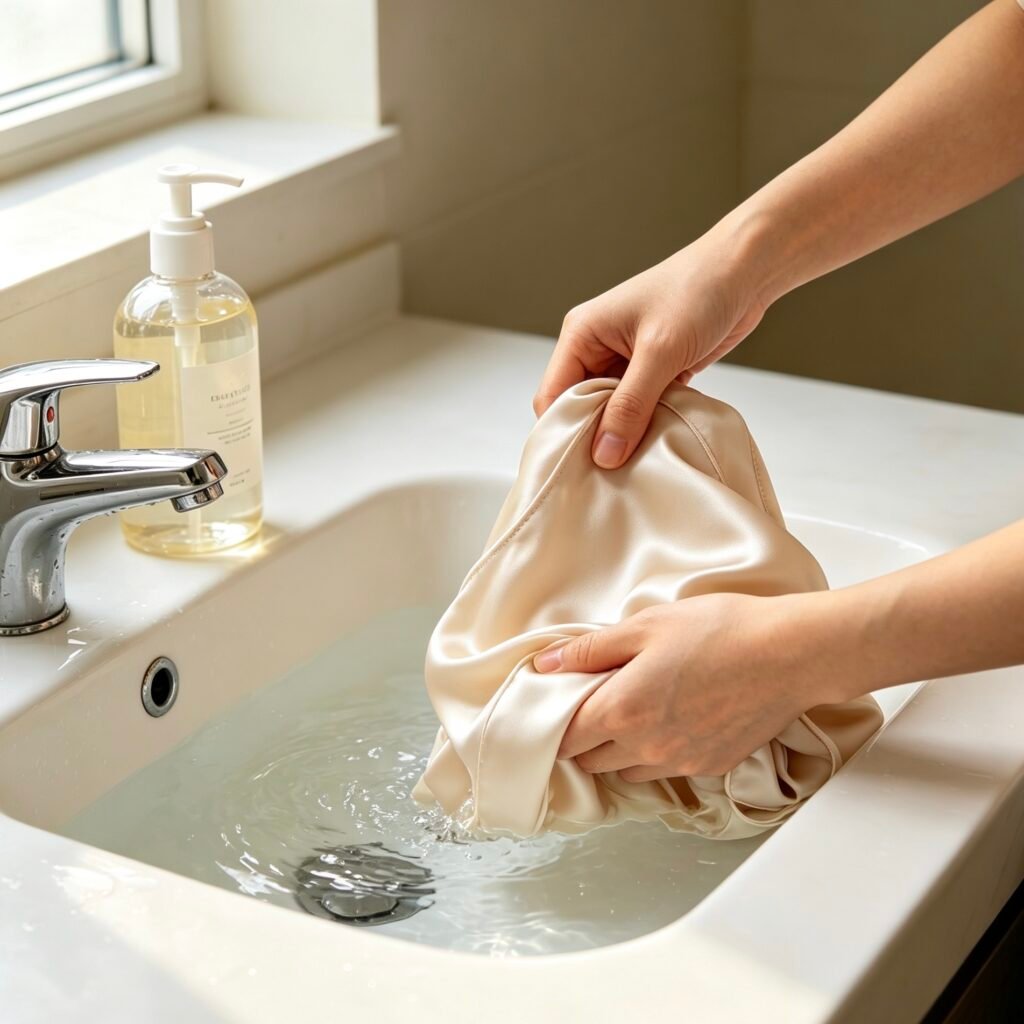
If the garment is approved for home washing, a gentle hand-wash routine is commonly used:
- Check the care label and inspect the garment.
- Use cool or suitably low-temperature water.
- Add a mild detergent suitable for silk or delicate fabrics.
- Gently move the pajamas through the water.
- Avoid rubbing, scrubbing, or twisting.
- Rinse thoroughly.
- Press out excess water without wringing.
- Air dry away from direct sunlight and strong heat.
This basic approach is consistent with guidance from several silk-care sources, although exact temperature and washing instructions should always follow the finished garment specification.
2. Why Does Silk Sleepwear Need Gentle Care?
100% silk is a natural protein fiber with a smooth surface and delicate structure.
Rough washing can affect:
- Fabric surface
- Color
- Drape
- Hand feel
- Garment shape
- Printed areas
- Seams and trims
Wet silk also requires careful handling because excessive twisting or pulling can place stress on the fabric and garment construction.
For silk pajamas, proper care is therefore not only about the fabric itself. The complete garment matters.
Collars, cuffs, piping, buttons, elastic waistbands, embroidery, prints, and labels can all influence the final care requirements.
3. What Should You Check Before Washing Silk Pajamas?
Before putting silk pajamas into water, check the care label first.
Then inspect the garment for:
- Stains
- Loose threads
- Buttons
- Piping
- Elastic
- Lace
- Embroidery
- Printed areas
- Other decorative details
For dark or highly printed silk pajamas, checking colorfastness on a hidden area may also be appropriate before the first wash.
If the garment is labeled Dry Clean Only, follow that instruction rather than applying a general home-washing method.
4. How to Hand Wash Silk Pajamas
Hand washing is commonly considered the gentlest home-care option when the garment allows washing.
Step 1: Prepare the Water
Use cool or suitably low-temperature water according to the care label.
Avoid very hot water.
Step 2: Add Mild Detergent
Use a small amount of detergent suitable for silk or delicate fabrics.
Avoid:
- Bleach
- Harsh detergents
- Strong stain removers
- Fabric softeners unless specifically approved
Step 3: Wash Gently
Turn the pajamas inside out when appropriate.
Gently move the garment through the water rather than scrubbing it.
Pay particular attention to printed areas, piping, lace, seams, and other delicate details.
Step 4: Rinse Thoroughly
Rinse with clean water until the detergent has been removed.
Avoid unnecessary repeated rubbing during rinsing.
Step 5: Remove Excess Water
Never aggressively wring or twist silk pajamas.
Instead, gently press out excess water or place the garment inside a clean towel and press or roll it gently to absorb moisture. This method is recommended across several silk-care guides.
Step 6: Air Dry
Reshape the garment gently and allow it to air dry away from strong sunlight and direct heat.
5. Silk Pajama Washing Guide
| Care Item | General Recommendation |
|---|---|
| Water | Cool or suitably low-temperature water |
| Detergent | Mild detergent for silk/delicate fabrics |
| Washing | Gentle hand washing when permitted |
| Friction | Keep rubbing and agitation to a minimum |
| Wringing | Avoid twisting or wringing |
| Bleach | Avoid |
| Drying | Air dry according to care instructions |
| Direct Sunlight | Avoid prolonged exposure |
| Heat | Avoid excessive heat |
Important: These are general care principles, not a replacement for the garment’s specific care label.
6. Can You Machine Wash Silk Pajamas?
Some 100% silk pajamas can be machine washed, but machine washing should never be assumed to be suitable for every silk garment.
If the care label allows machine washing:
- Turn the garment inside out.
- Place it in a fine mesh laundry bag.
- Use a delicate or silk-compatible cycle.
- Use a suitable low temperature.
- Avoid overloading the machine.
- Wash away from rough or heavy garments.
- Remove the pajamas promptly after washing.
Several silk-care sources recommend a delicate cycle and mesh bag when machine washing is specifically permitted.
For B2B brands, a “machine washable” claim should be supported by appropriate testing of the actual fabric and finished garment.
7. Hand Wash vs. Machine Wash
| Washing Method | Main Advantage | Main Consideration |
|---|---|---|
| Hand Wash | Maximum control over handling | More time-consuming |
| Delicate Machine Wash | Convenient | Only suitable for approved garments |
| Standard Machine Wash | Convenient | Generally too aggressive for delicate silk |
| Professional Cleaning | Suitable for selected garments | Depends on care label and garment construction |
For delicate silk sleepwear, gentle handling is more important than simply choosing one washing method.
8. How Does Silk Fabric Type Affect Care?
“Silk” describes the fiber, while Satin, Charmeuse, Crepe de Chine, Twill, Jacquard, and other terms describe different fabric constructions.
Different constructions can have different surface characteristics and care requirements.
| 100% Silk Fabric | Typical Characteristics | Care Focus |
|---|---|---|
| Silk Satin | Smooth and fluid | Minimize friction |
| Silk Charmeuse | Soft and flowing | Gentle washing |
| Silk Crepe de Chine | Lightweight with subtle texture | Avoid aggressive rubbing |
| Silk Habotai | Lightweight and smooth | Gentle handling |
| Silk Twill | More structured | Follow garment-specific care |
| Silk Jacquard | Woven patterns and texture | Protect the surface |
| 100% Silk Jersey | Stretchable knit structure | Avoid excessive pulling |
| 100% Silk Velvet | Soft pile surface | Extra care during handling |
The actual care requirement should be confirmed through the finished garment specification and testing.
9. How to Prevent Silk Pajamas From Fading
Color performance depends on the silk fabric, dyeing process, color, finishing, and washing conditions.
To help maintain color:
- Use appropriate low-temperature washing.
- Avoid harsh detergents.
- Avoid bleach.
- Avoid unnecessary long soaking.
- Separate colors where appropriate.
- Keep the garment away from prolonged direct sunlight.
For custom silk pajamas, brands should consider colorfastness testing before bulk production, especially for dark colors, contrast piping, and printed designs.
10. How to Prevent Snags and Fabric Damage
Before washing silk pajamas, check for anything that could catch or pull the fabric.
Examples include:
- Sharp jewelry
- Open hooks
- Rough buttons
- Zippers
- Other rough garments
- Damaged washing-machine components
When machine washing is approved, a mesh laundry bag can help reduce friction and tangling.
During daily wear, avoid prolonged contact with rough surfaces.
11. How to Prevent Shrinkage and Shape Changes
Shrinkage and dimensional changes can depend on the silk fabric, finishing, garment construction, and washing conditions.
To reduce unnecessary shape changes:
- Avoid excessive heat.
- Avoid aggressive washing.
- Do not twist wet silk.
- Do not pull the garment while wet.
- Reshape the garment gently after washing.
- Follow the specified drying method.
For B2B production, dimensional stability should ideally be evaluated during sample development.
A simple development process can be:
Fabric Selection → Sample → Washing Test → Dimensional Check → Adjustment → Bulk Production
12. How to Dry Silk Pajamas
After washing, gently remove excess water.
Do not wring or twist the garment.
For many delicate silk pajamas, air drying away from direct sunlight and strong heat is a practical choice.
Depending on the garment construction, silk pajamas may be laid flat or carefully hung according to the care specification.
Avoid:
- Direct strong sunlight
- Radiators
- High heat
- Unapproved tumble drying
Always allow the garment to dry completely before storage.
13. How to Iron Silk Pajamas
If ironing is allowed by the care label:
- Use a low-temperature setting.
- Turn the garment inside out when appropriate.
- Avoid leaving the iron in one place for too long.
- Take extra care around printed areas and decorative details.
For printed silk pajamas, the ironing requirement should be considered during product development because different printing and finishing methods may have different heat tolerances.
14. How to Care for Printed Silk Pajamas
Custom printing is an important option for private label silk sleepwear.
Depending on the product, brands may develop:
- Digital printing
- Inkjet printing
- Screen printing
- Placement printing
- All-over printing
- Double-sided digital printing
For printed silk pajamas, washing performance should be evaluated together with the printing process.
Before bulk production, brands should consider checking:
- Colorfastness
- Print appearance after washing
- Surface condition
- Color change
- Hand feel
- Dimensional stability
This is especially important for all-over prints, placement prints, and detailed double-sided designs.
15. How Often Should You Wash Silk Pajamas?
There is no single washing frequency that applies to every person or every silk pajama set.
It depends on:
- How long the garment is worn
- Perspiration
- Climate
- Personal habits
- Whether the garment has visible stains or odor
Between washes, silk pajamas can be aired in a clean, dry environment.
Small stains should be addressed promptly rather than aggressively scrubbing the entire garment.
The goal is to balance cleanliness with gentle handling.
16. How to Store Silk Pajamas
Before storage, make sure the pajamas are completely clean and dry.
Then:
- Store them in a dry environment.
- Keep them away from prolonged sunlight.
- Avoid excessive compression.
- Protect them from rough surfaces.
- Fold or hang according to the garment construction.
Lightweight silk camisoles and slip dresses should not be placed on unsuitable hangers that may stretch the shoulder areas.
Heavier silk robes should be stored in a way that supports their weight.
17. Common Silk Pajama Washing Mistakes
Using Hot Water
High temperatures can affect some silk fabrics, dyes, finishes, and garment components.
Using Harsh Detergent
Strong detergents and bleach may damage silk fibers or affect color and surface appearance.
Scrubbing Too Hard
Silk should not be treated like a heavy cotton fabric. Excessive rubbing can damage the surface.
Wringing Wet Silk
Twisting and wringing can stress the wet fabric and affect garment shape.
Drying in Direct Sunlight
Prolonged direct sunlight may affect color and fabric condition.
Using a Standard Washing Cycle
A normal washing cycle can create unnecessary friction and mechanical stress. If machine washing is permitted, use the specified delicate method.
18. B2B Silk Pajama Care Checklist
For brands developing OEM, ODM, or private label silk pajamas, care should be considered before bulk production.
| Item | What to Confirm |
|---|---|
| Fiber | 100% silk |
| Fabric | Exact silk construction |
| Momme | Approved fabric specification |
| Color | Approved color standard |
| Printing | Printing method and colorfastness |
| Construction | Seams, piping, buttons, elastic |
| Washing | Approved washing method |
| Shrinkage | Dimensional stability |
| Drying | Approved drying method |
| Ironing | Suitable temperature |
| Care Label | Matches tested requirements |
| Packaging | Garment completely dry before packing |
This helps prevent a common private label problem: the product is ready for production, but the care instructions have not been properly defined.
19. Silk Pajama Care Labels for Brands
A care label should describe the actual care requirements of the finished garment.
Depending on the product, it may include:
- Fiber composition
- Washing method
- Washing temperature
- Bleaching instructions
- Drying method
- Ironing temperature
- Professional cleaning instructions
Avoid using generic claims such as “Machine Washable” unless the actual garment has been tested and approved for machine washing.
The same principle applies to claims such as:
- Tumble dry
- No ironing required
- Wash at any temperature
- Guaranteed colorfast
The care label should match the actual product specification.
20. Develop Custom 100% Silk Pajamas With Sinyoo Silk
Sinyoo Silk provides custom 100% silk sleepwear manufacturing for brands, retailers, wholesalers, fashion companies, gift businesses, and e-commerce brands.
Our custom silk sleepwear range includes:
- Long-Sleeve Silk Pajama Sets
- Short-Sleeve Silk Pajama Sets
- Short-Top & Long-Pants Silk Pajama Sets
- 2-Piece Silk Camisole + Shorts Sets
- Silk Slip Dresses
- Silk Nightgowns
- Short-Sleeve Silk Sleep Dresses
- Long Silk Robes
- Long Silk Robe + Silk Slip Dress Sets
Brands can customize:
Silk Fabric + Momme + Color + Printing + Size + Construction + Branding + Packaging
Care requirements can also be considered during the product development and sampling stage.
Final Thoughts: How to Care for 100% Silk Pajamas
The basic principle of silk pajama care is simple:
Check the care label, use gentle washing, minimize friction, avoid excessive heat, never aggressively wring wet silk, and dry the garment carefully.
For B2B brands, silk care should begin before production.
The fabric, dyeing, printing, garment construction, trims, washing performance, dimensional stability, and care label should all be considered together.
A well-developed silk pajama product is not only about how it looks when it leaves the factory—it should also have clear and appropriate care instructions for the end customer.
Contact SINYOO SILK today to start Custom 100% Silk Sleepwear Manufacturer for Brands
21. FAQ
Can I use regular detergent to wash silk?
No, regular detergent is too harsh for silk and can damage the fibers.
Can I dry silk sleepwear in a dryer?
It’s best to avoid using a dryer for silk garments. The high heat can cause shrinkage and damage the delicate fibers. Instead, lay your silk sleepwear flat on a clean, dry towel and roll it up to remove excess water. Then, lay it flat on a drying rack to air dry.
Is it okay to wear silk sleepwear in the summer?
Yes, silk is a natural temperature regulator, making it suitable for both summer and winter. It can help keep you cool in hot weather and warm in cooler temperatures.
How can I prevent my silk sleepwear from snagging?
Be mindful of sharp objects and rough surfaces when wearing or handling silk sleepwear. Keep your nails trimmed and avoid wearing jewelry that could catch on the fabric.
Share: